 English
 हिंदी भाषा

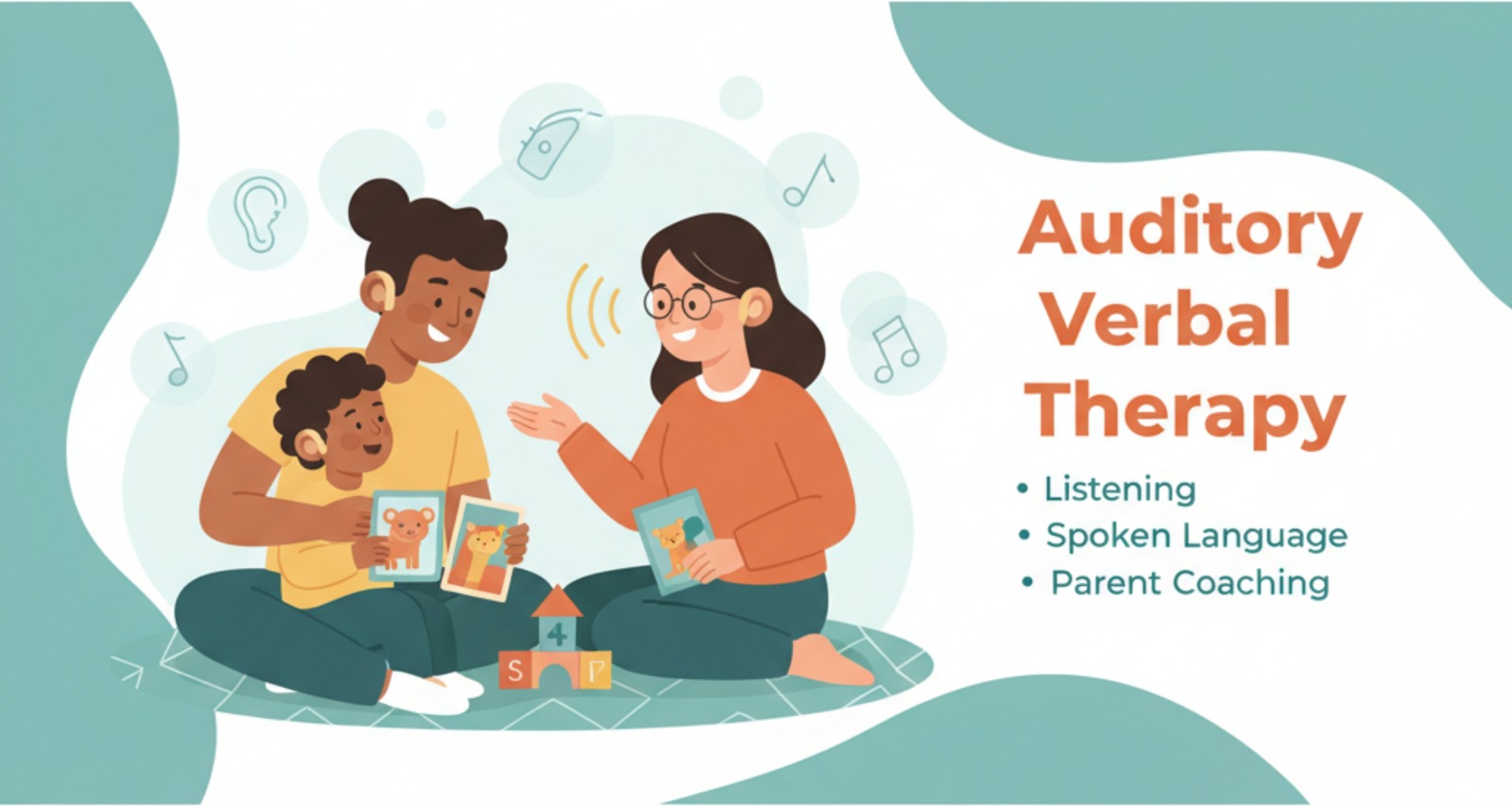
Auditory Verbal Therapy (AVT) is a specialized,
evidence-based therapy approach designed to help children with hearing loss
develop listening and spoken language skills. It focuses on teaching children
to use their residual hearing—with the help of hearing aids or cochlear
implants—to understand speech and communicate verbally, without relying on
visual cues such as lip-reading or sign language.
Auditory Verbal Therapy begins with a detailed assessment of
the child’s hearing, listening abilities, speech, language, and overall
development. Therapy sessions are usually conducted one-on-one and are highly
interactive, using play-based and everyday listening activities. The goal is to
integrate listening and spoken language into the child’s natural environment.
A key component of AVT is active parent involvement.
Parents and caregivers are coached during each session so they can carry over
listening and language strategies into daily routines such as mealtime,
playtime, and storytelling. This continuous practice helps children make faster
and more meaningful progress.
Auditory Verbal Therapy focuses on:
- Developing
awareness and attention to sound
- Improving
listening and speech perception skills
- Building
age-appropriate spoken language
- Enhancing
clear speech and communication
- Supporting
mainstream education and social integration
AVT is most effective when started early, soon after the
identification of hearing loss and fitting of hearing technology. With
consistent therapy, proper use of hearing devices, and strong family
involvement, children can develop spoken language skills comparable to their
hearing peers.
The ultimate aim of Auditory Verbal Therapy is to help
children listen, speak, learn, and communicate confidently in everyday life,
enabling them to fully participate in family, school, and social environments.