 English
 हिंदी भाषा
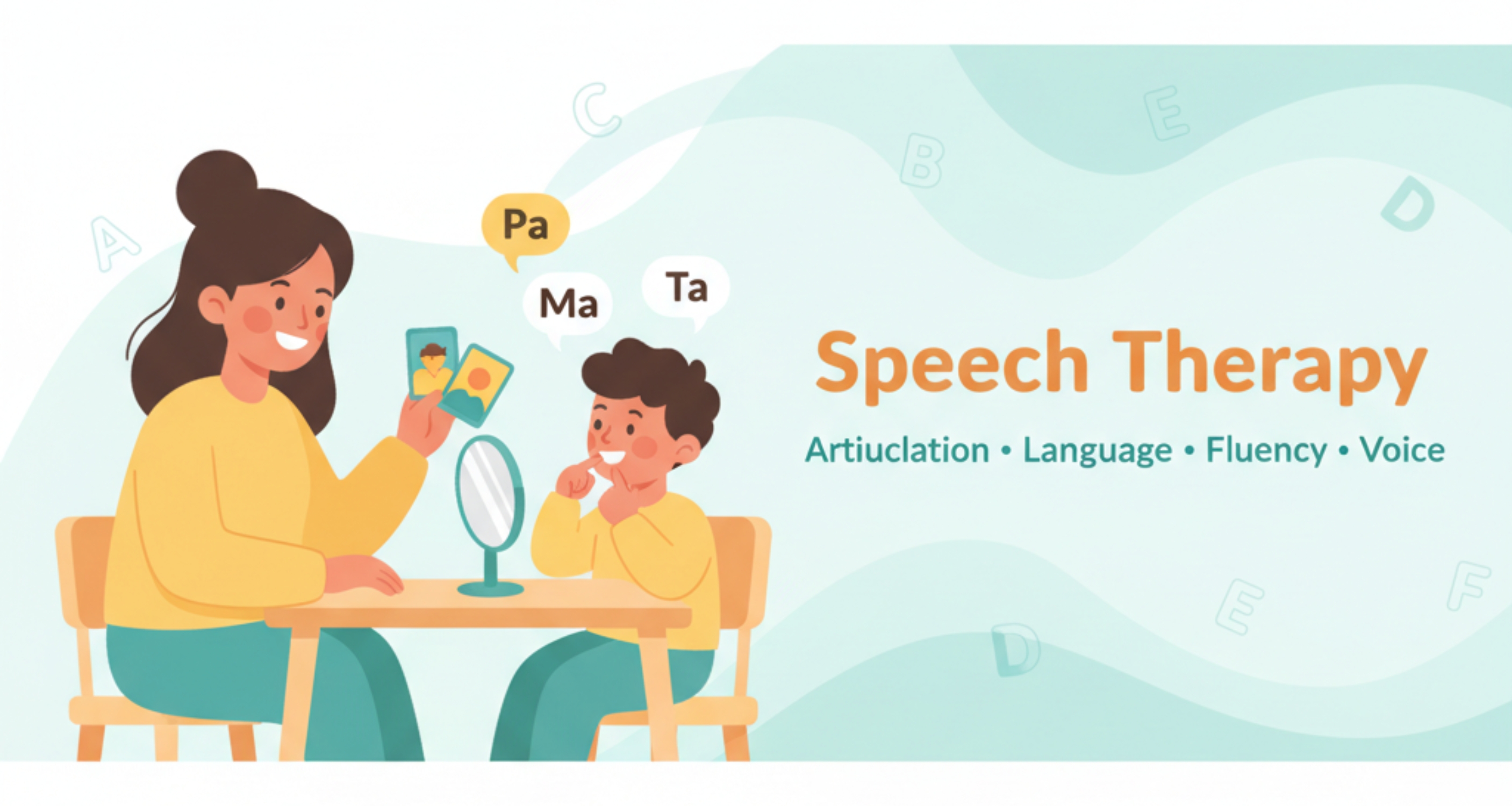
Speech therapy, performed by Speech-Language Pathologists (SLPs), is a treatment for communication, speech, language, and swallowing disorders in all ages, helping people improve speaking clearly, understanding language, expressing thoughts, and eating/swallowing safely, using exercises, activities, and tools to build skills for better daily function and social connection.
It addresses issues from lisps to stroke recovery, autism, and feeding
problems, focusing on improving articulation, fluency, voice,
comprehension, and social communication
What It Treats:
- Speech Disorders: Difficulty producing sounds (articulation), stuttering (fluency), or voice problems (hoarseness).
- Language Disorders: Trouble understanding (receptive) or using (expressive) words and sentences, common in autism or after brain injury.
- Cognitive-Communication: Memory, problem-solving, and attention issues affecting communication.
- Swallowing (Dysphagia): Difficulty eating or drinking safely, common after stroke or with neurological conditions.
- Social Communication: Difficulty with social cues and appropriate language use
- Assessment: SLPs evaluate specific needs through observation and testing.
- Therapy Techniques:
- Exercises: Oral motor exercises for mouth muscles, repetition for sounds.
- Activities: Games, books, and objects to build vocabulary and grammar.
- Modeling: Demonstrating correct speech and language.
- Alternative Methods: Using pictures (PECS), gestures, or devices for non-verbal communication.