 English
 हिंदी भाषा

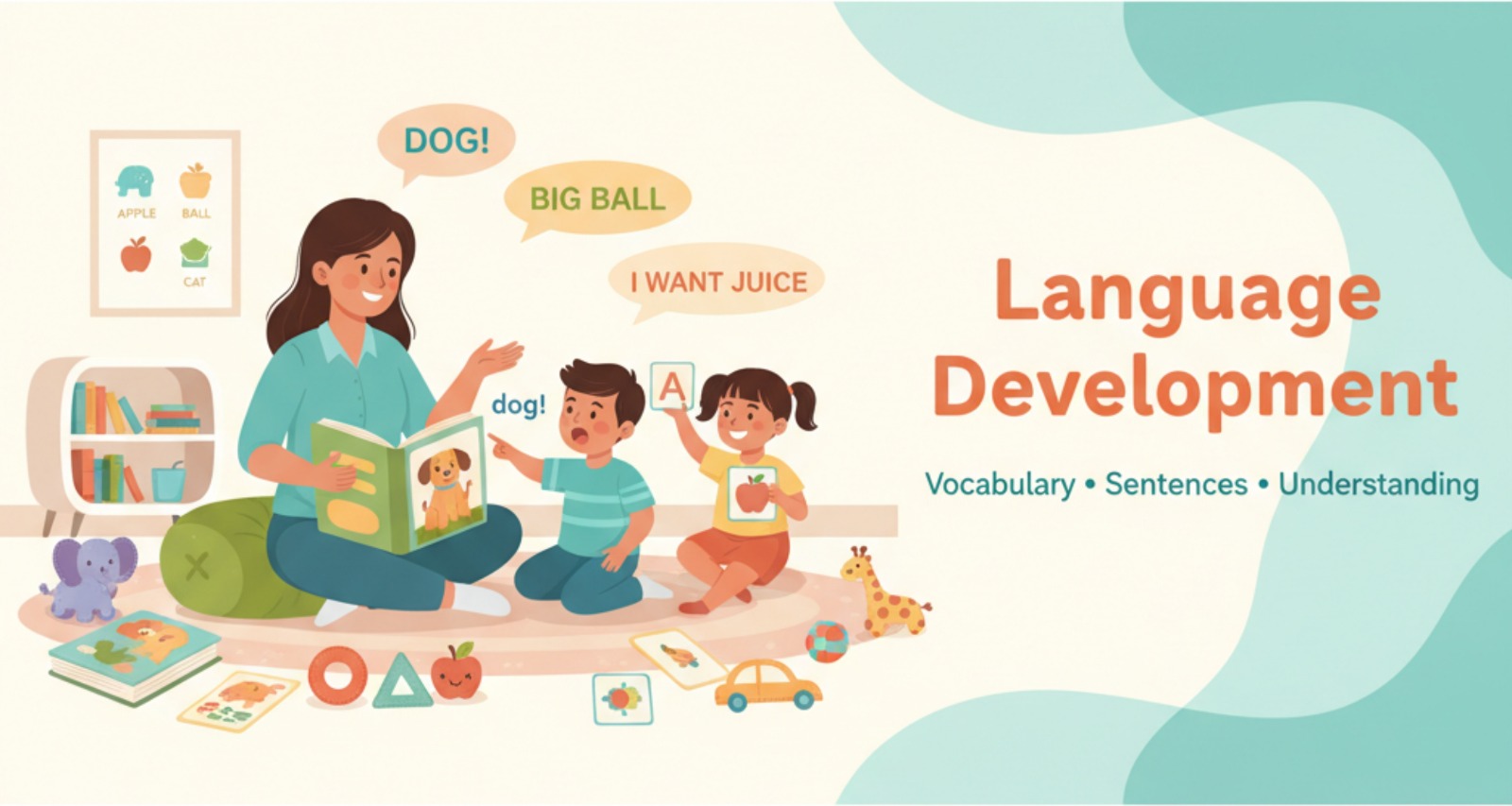
Language Development refers to the process by which
children and individuals learn to understand and use language to communicate
effectively. It includes both receptive language (understanding words,
sentences, and meanings) and expressive language (using words, gestures,
and sentences to share thoughts, needs, and ideas). Strong language skills are
essential for communication, learning, social interaction, and overall
development.
Language development starts from birth and grows rapidly in
the early years of life. Children learn language by listening to people around
them, interacting with family members, and exploring their environment. As they
grow, they gradually build vocabulary, learn to form sentences, ask questions,
and express emotions.
Some children may experience delays or difficulties in
language development due to factors such as hearing problems, developmental
delays, neurological conditions, limited exposure to language, or other
underlying causes. These challenges can affect a child’s ability to understand
instructions, express needs, interact socially, and perform well academically.
Language development support and therapy focus on:
- Improving
understanding of words and instructions
- Building
vocabulary and sentence formation
- Enhancing
conversation and social communication skills
- Encouraging
age-appropriate language milestones
- Strengthening
listening and comprehension abilities
Early identification and intervention are very important.
With timely support from a speech-language pathologist, children can
significantly improve their language skills. Therapy sessions are often
play-based, interactive, and tailored to the child’s age and needs, making
learning natural and enjoyable.
Parents and caregivers also play a vital role by talking,
reading, and engaging with their child daily. A language-rich environment at
home helps reinforce therapy and promotes faster progress.
Overall, healthy language development enables individuals to
communicate clearly, build relationships, succeed in school, and participate
confidently in everyday life. Early support can make a lasting positive
difference in a child’s future communication and learning abilities.