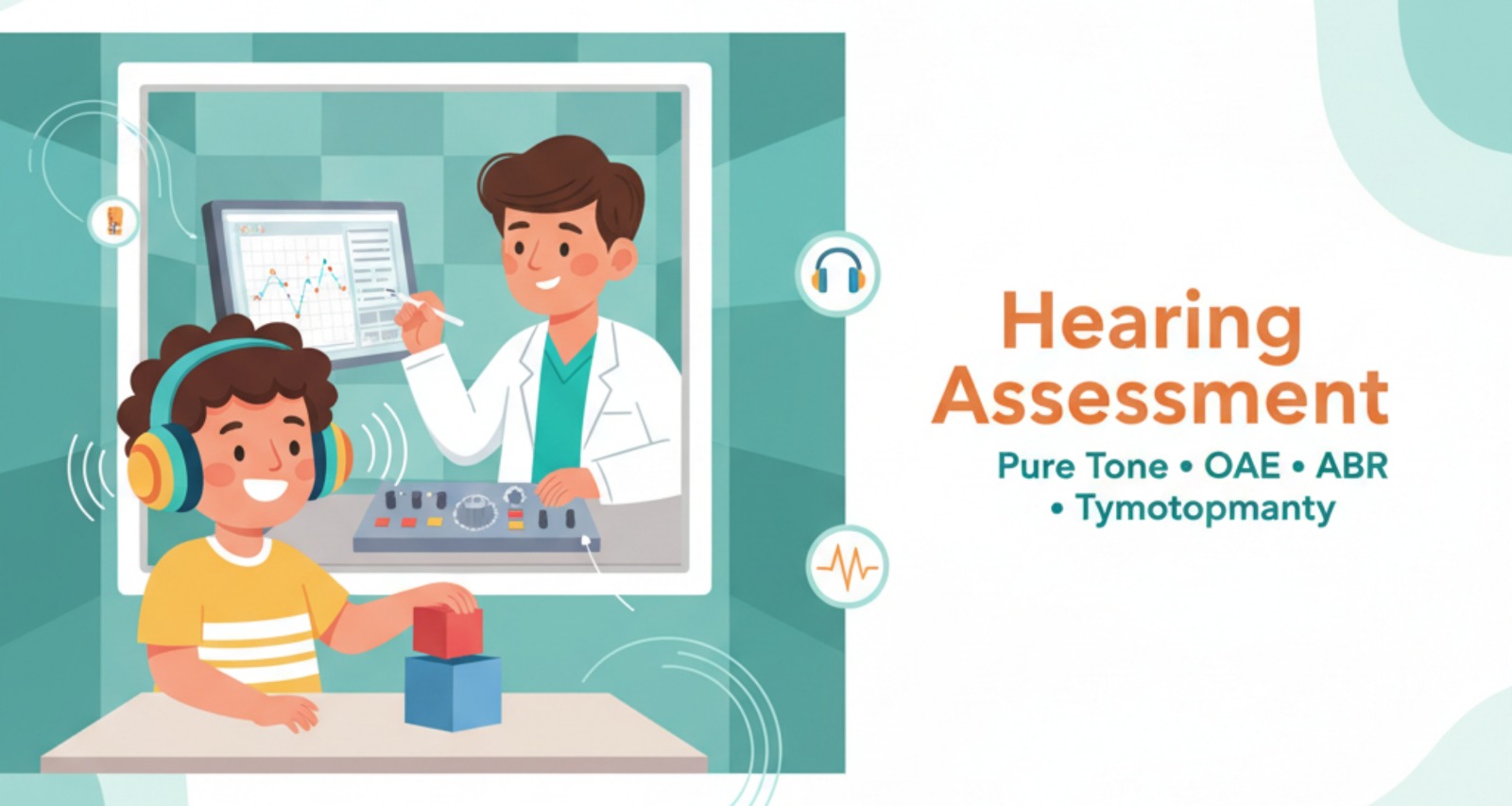
A Hearing Assessment is a comprehensive and painless evaluation designed to measure how well a person can hear and understand sounds. It is conducted by a qualified audiologist using specialized equipment to test different aspects of hearing, including the ability to detect soft and loud sounds, understand speech, and distinguish between different tones and frequencies.
During a hearing assessment, a series of tests may be performed, such as pure-tone audiometry (to find the faintest sounds you can hear), speech testing (to check how well you understand words), and middle ear tests (to examine how your eardrum and middle ear are functioning). For children or infants, age-appropriate methods like play audiometry or otoacoustic emissions (OAE) may be used.
Hearing assessments are important for people of all ages. Early detection of hearing loss can significantly improve speech, language, learning, and social development in children, while for adults it can enhance communication, confidence, and overall quality of life. If hearing loss is identified, the audiologist can recommend suitable solutions such as medical treatment, hearing aids, therapy, or communication strategies.
Regular hearing check-ups are especially important for individuals exposed to loud noise, experiencing difficulty hearing conversations, ringing in the ears, or age-related changes in hearing. A timely hearing assessment helps ensure healthy hearing and better connection with the world around you.
 English
 हिंदी भाषा